

Key Takeaways
- Play-based pedagogy fosters children’s learning and development by promoting discovery, creativity and problem-solving in early childhood settings across Sydney and New South Wales.
- Embedding the Early Years Learning Framework (EYLF) with play means educational outcomes are achieved, and children engaged in authentic, child-directed experiences.
- Intentional teaching – thoughtful observation and scaffolding by educators – enriches children’s learning and nurtures their emerging ideas.
- Outdoor play and connecting with local environments allow children to access nature, develop resilience and support physical and mental health in urban communities.
- Culturally responsive and inclusive play practices mirror Sydney’s diversity, promoting language development, respect and a deep sense of belonging for all children.
- Families are invited to integrate play into everyday life at home and outdoors, forging family connections and nurturing holistic child development.
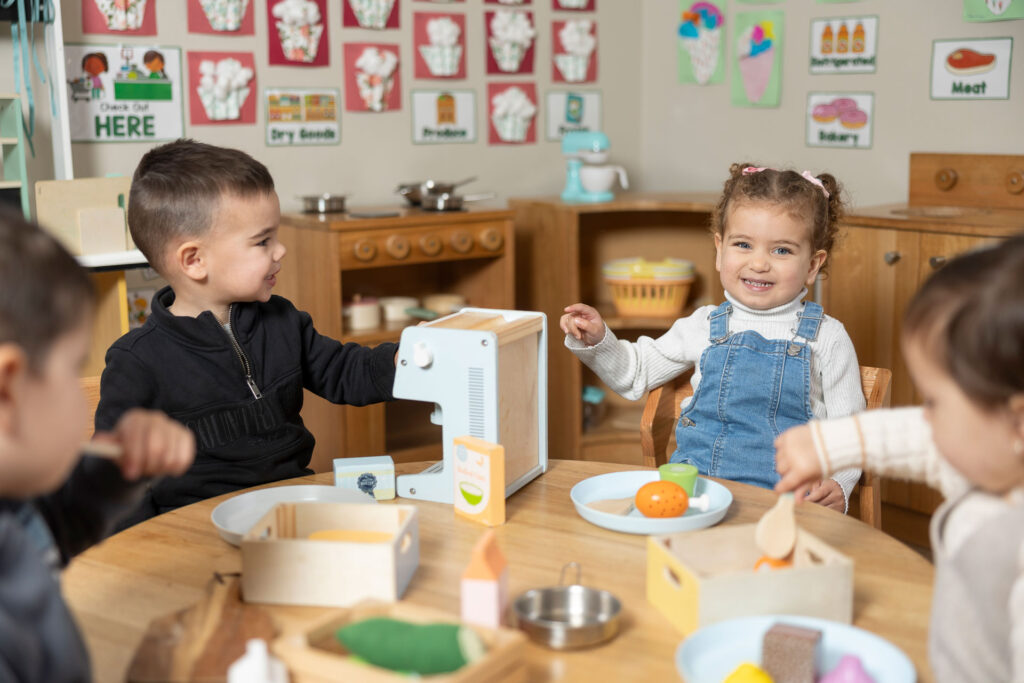
In early years education, play-based pedagogy means children learn best through play. In Sydney, early learning centres and preschools frequently rely on play as the vehicle for social skills, language and thinking.
Teachers establish uncomplicated games, collaborative activities and imaginative frivolity to allow children to absorb concepts at their own speed. This practice aligns with the Early Years Learning Framework in Australia, and suits local culture and family requirements.
Understanding Play-Based Pedagogy
What is play for young children in Australia? It sits at the core of early years education, acknowledged as an essential space for learning and holistic growth. Through play, children understand their world, trial concepts and develop the capabilities they require to flourish.
New South Wales teachers, for example, encourage settings where play is directed by children’s own curiosity, interests and abilities, with adults facilitating children’s development by taking part, modelling and encouraging additional investigation.
Beyond Just Fun
Play is a serious engine of cognitive and emotional development. Through playing in varied ways, children’s brains create pathways which provide the basis for memory, language and self-regulation. The educational value of play extends far beyond amusement: it builds foundations in literacy, numeracy, and problem-solving.
For instance, stacking blocks can introduce simple maths, and sharing sand tools teach negotiation. Play-based learning allows children to develop social skills. Children practice turn-taking, empathy, and conflict resolution when they play together, reinforcing their feeling of community.
Teachers can use all kinds of props, from puppets to tiny worlds or water play, to keep structured learning playful. Incorporating play into their daily routine maintains children’s interest, aids retention and boosts self-esteem. Striking the right balance between structured and free play makes sure that the play-based learning happens in a purposeful and fun way.
The EYLF Connection
Play-based pedagogy sits closely alongside the Early Years Learning Framework (EYLF), which is embedded into curriculum and practice across Australian early childhood settings. The EYLF emphasises play in achieving learning outcomes (e.g. Children have a strong sense of identity, wellbeing and connection with their world).
Teachers draw on play-based approaches to construct meaningful learning experiences. Intentional teaching is a key element of the EYLF. This means educators don’t just observe children playing, but step in thoughtfully, using assessment and reflection to guide learning.
They choose resources and arrange environments—like setting up block stations or inviting role play—to meet curriculum goals while responding to children’s interests. Quality standards, including elements 1.2.1 and 1.2.2, reinforce the need for both intentionality and responsiveness in play-based programs.
Child-Led Discovery
Childrens’ learning thrives when they are given agency. In play-based settings, children direct their own play, choosing activities that appeal to them. This self-direction ignites curiosity and develops independence. Teachers stand back, respond, provide new materials or adjust the surroundings so kids can go further.
Allowing children to explore at their own pace means every child can succeed. Some might be drawn to painting, others to dramatic play or building with blocks. Teachers can use assessment tools and critical reflection to track progress and adapt their approach.
The mix of child-led discovery and educator guidance ensures learning is both rich and personalised.
- Object Play: Using blocks, balls, sand, or loose parts to explore cause and effect, build, and create.
- Role Play: Pretending to be shopkeepers, doctors, or family members, which develops empathy and language.
- Free Play: Open-ended, unstructured activities where children set their own rules and follow their interests.
Core Principles of Play-Based Learning
Play-based learning in ECE puts children at the centre of their own learning. Children direct their own experiences using their ideas, interests and curiosity. It cherishes feisty, messy, active learning in safe, inclusive, resourced environments.
Teachers become more guides or co-learners, ensuring the environment is conducive to discovery and development. Core principles include:
- Child-directed learning, guided by each child’s interests and strengths
- Physical, sensory experiments that allow exploration and risk-taking
- Focus on process, not just outcomes or finished products
- A safe and stimulating environment for movement, noise and experimentation
- Social connections, where kids collaborate and build relationships
- Little free play time and hence opportunities for other types of play (e.g. cooperative, parallel, associative play)
1. Agency
Children shine when they feel in control. Providing them with the option of what, how and whom to play with encourages their sense of agency. When they’re trusted to make decisions, like blocks over puzzles or the rules of a game, they learn to trust themselves.
It’s this sense of control that’s critical for confidence and motivation. Teachers can facilitate this by providing a combination of child-initiated and adult-directed experiences and attending to children’s suggestions. Permitting independent exploration, however small, develops autonomy and affirms children’s agency in determining their learning.
2. Inquiry
This is inquiry, the very essence of play-based learning. Open-ended activities – such as water play, loose parts or forest school – encourage children to question and experiment. Children instinctively ask “what if?” and “why?” when building, mixing or sorting.
It’s these questions that send them testing things out through trial and error, not simply from adults. When teachers step back and allow children to investigate, children are critical thinkers who learn from error. Play becomes a medium of scientific investigation, where children create experiments, make observations and reach their own conclusions.
3. Imagination
Imagination fuels learning through allowing for creativity and emotional development. Costumes, cardboard boxes or fabric scraps prompt children to build new worlds or narratives. Pretend play and narrative allow children to assume different identities, cultivating language and empathy.
It supports cognitive development. Imaginative play provides children with a way to process their feelings and experiences. Through offering props and inviting pretend play, teachers reinforce narrative and problem-solving.
4. Connection
Strong connections between play and real life enable children to make sense. Play sometimes plays out cultural backgrounds, family traditions or local stories, allowing children to link home with school. Team play (creating a city out of recyclable waste, role-playing a known narrative) builds rapport.
Teamwork fosters social skills like turn-taking, negotiation and empathy. Family engagement – such as sharing favourite games or songs – enhances these connections and reinforces a sense of belonging.
5. Process
Learning in play is more important than getting outcomes. Children try things out, fail, pick themselves up and try again – building grit and resilience. Teachers can encourage reflection, questioning children what went well or what could be different next time.
Recording play – in photographs or notes – can help follow and document growth, and prompt children to discuss what they have done. This continuous work in process maintains learning fluid and attuned to the individual child’s requirements.
Why It Matters for Sydney Kids
Play-based learning is an essential component of early years education in Sydney. The early years set a child’s brain in motion, so the way they learn and play now makes a huge difference to their future. In Sydney, play-based learning isn’t only enjoyable – it’s how kids develop abilities, make sense of their world, and establish lifelong habits.
The Australian Early Years Learning Framework (EYLF) supports this, embedding play as a central component of high quality education for young children in New South Wales.
| Benefit | Description |
|---|---|
| Cognitive growth | Helps children make sense of the world, supports brain development |
| Social skills | Builds teamwork, empathy, and conflict resolution through shared play |
| Emotional resilience | Fosters problem-solving, adaptability, and self-regulation |
| Physical health | Outdoor play supports gross motor skills and overall wellbeing |
| Environmental awareness | Nature play deepens connections to Sydney’s unique natural environment |
| Lasting impacts | Sets strong foundations for future learning and development |
Play in Our Diverse Communities
Play-based pedagogy flourishes within communities defined by varied cultures, backgrounds and experiences. In Sydney – and New South Wales – early childhood facilities are filled with languages, cultures and family histories. This diversity demands that we have play spaces and experiences which honour the lives of all children.
When teachers weave cultural awareness into play, they not only help children feel seen and valued but develop social skills, empathy and respect. EYLF lays the foundation for such inclusive, responsive teaching. Play can then be a bridge – bridging worlds, nurturing language development, giving each child a sense of belonging.
| Culturally Responsive Play Practices | Description | Example |
|---|---|---|
| Use of multicultural resources | Toys, books, and materials from many cultures | Dolls in cultural dress, bilingual storybooks |
| Celebrating cultural events | Themed activities for cultural festivals | Lunar New Year craft, NAIDOC Week stories |
| Valuing home languages | Encouraging play in home languages | Singing songs in Mandarin and English |
| Sharing family traditions | Inviting families to share customs | Cooking demonstrations, sharing family stories |
Bringing Play Home and Outdoors
Play-based pedagogy doesn’t end at the classroom door. It flourishes when families take play out of the house and to the home. Australian families in Sydney and New South Wales are fortunate to have open access to a range of natural environments – from their backyards to coastal parks. Utilising these areas will encourage social, physical and cognitive development, and strengthen relationships between children and their caregivers.
Backyard and Balcony Play
- Checklist for Sensory Exploration with Natural Elements:
- Gather up fallen leaves or gum nuts and classify them by type or colour.
- Scrape patterns or simple sculptures in sticks, smooth stones and sand.
- Make a nature scavenger hunt: find something rough, something soft, something that smells strong.
- Fill a tub with water for floating and sinking tests with twigs and bark.
Outdoor play in a garden or even a balcony can build gross motor skills. Chalk drawing on pavers or hopscotch or improvised obstacle courses with household items all promote balance and coordination. Nature play, where kids can dig in dirt or climb a firm tree, provides a sense of liberty and ignites imagination.
Parents can promote these moments by allowing children to set the pace and play what they want, intervening only for safety.
Everyday Maths Fun
Far from isolated practice, kids learn maths more effectively when it’s stitched into everyday life. Count pegs while you hang the washing, grouping pantry items by size or shape, or measuring water for cooking. All these simple activities introduce maths concepts such as counting, sorting, and measuring without any formal lessons.
Traditional games such as snakes and ladders, card games or dominoes help children with number recognition and turn-taking. Creating a shop with empty food boxes allows children to use coins, add prices or weigh items with a kitchen scale. Fun maths makes it playful and not a burden for children.
Engaging with maths at home can dispel anxiety and foster confidence. Explicit, hands-on play grounds abstract concepts in real-world contexts, ensuring learning sticks.
Exploring Local Spaces
Sydney’s parks and bush reserves are perfect for play-based education. Exploration of local spaces enables children to relate to their environment and local culture. An ordinary walk can become a nature scavenger hunt, gathering interesting leaves or listening for bird calls.
Nature kindergartens provide examples in which most of the day happens outside, proving how outdoor environments foster social skills, self-assurance and curiosity. Outdoor story times or nature play sessions are routinely put on by local community centres and libraries, which makes attending them more accessible to families.
Outdoor adventures in local and natural spaces allow children to refine motor skills, take on personal challenges and socialise with peers during their formative years. Spaces to play in are vital, and while large green spaces can be important, even a patch of grass or a community garden area will suffice for meaningful play.
Why Ashcroft Families Trust St Anthony’s
St Anthony’s has earned the trust of Ashcroft families through its sophisticated understanding of how play-based pedagogy achieves measurable learning outcomes while supporting each child’s unique developmental trajectory.
Our centre’s approach differentiates both the process and product of learning, allowing children to select experiences that match their proficiency levels while receiving guided feedback that extends their capabilities. This individualized methodology resonates with local families who observe their children developing mathematical concepts through play.
Our commitment to the teacher-as-player model distinguishes our program from traditional childcare approaches, positioning educators as active co-constructors of learning rather than passive supervisors
Families witness how teachers engage in meaningful, planned interactions that guide children toward emergent skills while maintaining the authentic joy of discovery – whether supporting phonological understanding during dramatic play or encouraging mathematical reasoning through collaborative problem-solving activities.
This evidence-based practice creates a collaborative learning environment where children develop as agentic learners, building the metacognitive and self-regulatory skills essential for future academic success while fostering the social-emotional capabilities that support lifelong wellbeing.
Conclusion
Play-based learning gives Sydney kids a fair go to grow, learn and connect. It slots seamlessly into everyday life – be it constructing sandcastles at Bondi or discovering neighbourhood parks with new friends. Children learn real-life skills by doing rather than by passive observation. Teachers guide the play, but children take the lead. Parents and carers can play along as well, no flashy toys or huge budgets necessary. Each block stack or dress-up game represents a fresh opportunity to learn. For families who want that strong start, play-based learning packs a punch. Want to see even more happy, engaged kids in your home or centre? Get in touch with our team now.
Frequently Asked Questions
What is play-based pedagogy in early childhood education?
Play-based learning is an educational approach where children explore, experiment, and discover through play. It allows them to develop social, emotional, physical, and cognitive skills in a natural, engaging way.
Why is play-based learning important in early childhood?
Play helps young children make sense of the world, build independence, and develop foundational skills like problem-solving, language, and self-regulation. It’s also how they express creativity and build relationships.
Why is play-based pedagogy important for children in Sydney?
Sydney’s multiculturalism is nurtured by play-based learning, which acknowledges different life experiences and ways of learning. It promotes inclusion, aiding all children to be acknowledged and nurtured.
What role do educators play in play-based pedagogy?
Teachers facilitate and enhance children’s play by offering resources and posing open-ended questions. Their purposeful engagement strikes a balance between achieving learning objectives and enjoyment.
How can families encourage play-based learning at home?
Families can create safe spaces, use simple materials and allow children to play freely. Outdoor play in Sydney’s parks and backyards supports children’s physical development and wellbeing.
Is play-based learning suitable for all cultural backgrounds?
Yes, play-based learning is versatile. It embraces cultural diversity, enabling the children to discover and share their own traditions, making it perfect for multicultural Sydney.
Are there specific benefits to outdoor play in Sydney’s environment?
Sydney’s parks, beaches and gardens provide unique settings to play out. Outdoor play enhances physical wellbeing, supports risk-taking and reconnects children with the natural world.